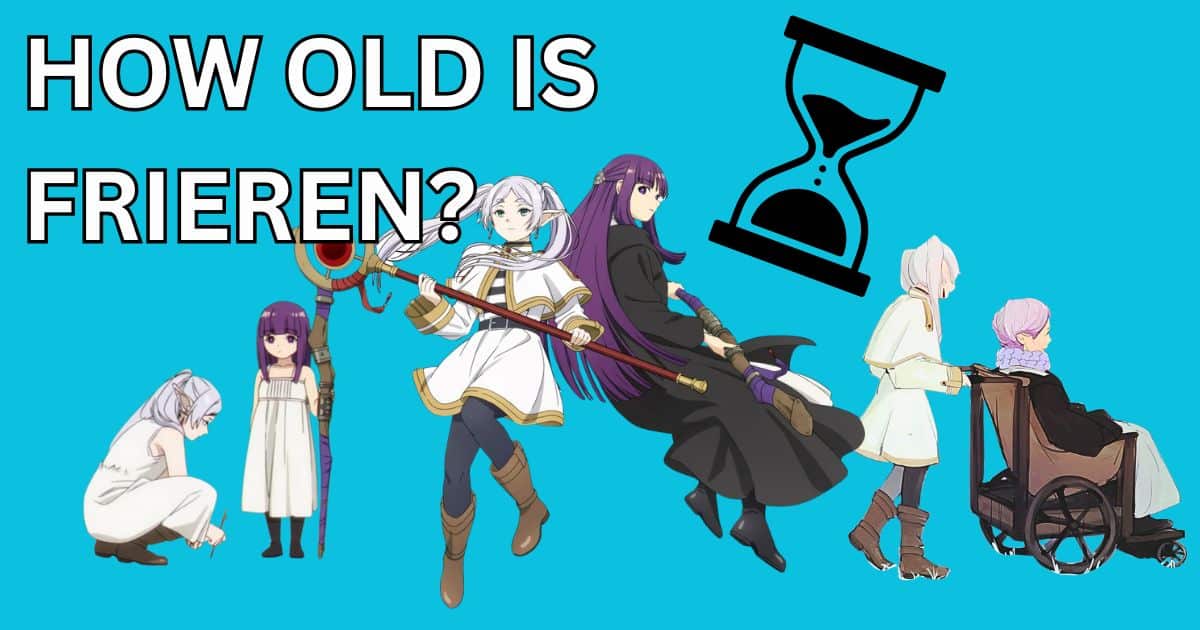
One of the most common questions new viewers ask after watching just a few episodes of Frieren: Beyond Journey’s End is surprisingly simple: how old is Frieren, really? Frieren is over 1,000 years old in the story, a fact confirmed by multiple canonical sources in the anime and manga. She looks young, acts calm, and walks through history like time barely touches her. Yet everyone around her ages, grows old, and eventually disappears.
The answer to Frieren’s age isn’t just a number. It’s the foundation of the anime’s emotional core. To truly understand Frieren’s character, you also need to understand how elves age, why humans feel so fleeting to her, and how characters like Fern and Stark fit into this vast difference in lifespan.
This article breaks it all down, from Frieren’s estimated age to the concept of elven longevity, and even how old the other main characters are by comparison.
Why Frieren’s Age Matters So Much
Frieren’s long life explains why she initially appears distant, emotionally reserved, and slow to react to human loss. When Himmel dies, she realizes too late that the time she dismissed as insignificant was, in fact, precious.
Her age causes her greatest flaw:
she assumes she will always have more time.
That realization becomes the reason she starts her journey again — not to fight demons, but to understand humans, memories, and regret. Without her age, Frieren: Beyond Journey’s End would lose its meaning entirely.
The Concept of Elves and Their Long Lifespan
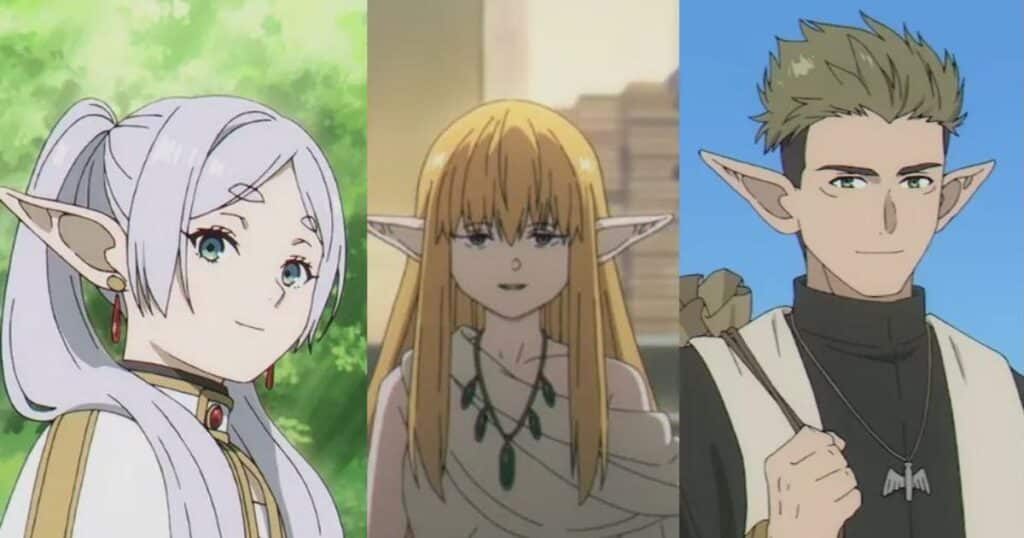
Elves in Frieren are not just long-lived — they are almost timeless.
How Elves Age
- Elves age extremely slowly
- Their physical appearance barely changes over centuries
- Emotional attachment develops at a much slower pace
- They struggle to perceive time the way humans do
Unlike many fantasy stories where elves are portrayed as arrogant or superior, Frieren presents them as detached observers of time. They don’t rush because, to them, nothing feels urgent.
Frieren’s race is not immortal, but their lifespan is so long that death feels abstract — until it suddenly isn’t.
Why Elves Struggle With Human Emotions
Humans form relationships knowing time is limited. Elves don’t.
This difference explains why Frieren:
- Rarely expresses strong emotions early on
- Doesn’t immediately understand Himmel’s affection
- Takes decades to process grief
By the time she realizes what she lost, Himmel is already gone. That delay is tragic, not cruel. Frieren never meant to ignore her companions — she simply didn’t understand how fast their time would end.
How Long Do Elves Live in Frieren: Beyond Journey’s End?
If you’re a Frieren fan, one of the main questions you would ask would be: How long do elves live in Frieren? The anime never opens with a textbook explanation, yet as the story unfolds, it becomes clear that elven lifespan is not just a piece of world-building, it is the emotional backbone of the entire series.
In Frieren: Beyond Journey’s End, elves don’t just live long, they live on a completely different scale of time. Their lifespan is one of the core reasons the story feels so quiet, emotional, and reflective. To understand Frieren as a character, you first need to understand how elves experience life itself.
So, how long do elves live in Frieren?
Elves Live for Centuries—Often Over a Thousand Years
Elves in Frieren: Beyond Journey’s End are not confirmed to be immortal, but everything shown in the story strongly suggests that they live hundreds to thousands of years.
Frieren herself is over 1,000 years old, yet she does not appear elderly, weakened, or close to the end of her life. Her physical appearance remains youthful, her magical ability continues to grow, and her curiosity about magic is far from exhausted. This alone tells us that a millennium is not the upper limit of elven lifespan.
Other elves in the series reinforce this idea. Characters like Serie and Kraft have lived so long that entire eras of history pass beneath their notice. Their existence confirms that elven lifespans likely extend far beyond what humans can comprehend.
Elves Age Extremely Slowly
Elven aging in Frieren is almost imperceptible.
Physically, elves:
- Maintain youthful appearances for centuries
- Show minimal signs of aging
- Retain strength, agility, and magical capacity
Emotionally, they also age slowly. Elves take much longer to form attachments, process emotions, or feel urgency. This is not because they lack empathy, but because time does not pressure them in the same way it pressures humans.
For an elf, waiting fifty years is not patience — it is normal.
Elves Experience Time as a Vast Continuum
Humans live in moments. Elves live in eras.
An elf can:
- Witness kingdoms rise and fall
- See magic systems evolve
- Outlive legends and myths
To them, historical events blur together. This is why Frieren casually references ancient spells or forgotten mages as if they were recent acquaintances. To humans, those names are history. To Frieren, they’re memories.
This perspective makes elves excellent archivists of magic, but poor judges of emotional timing
The Age of Other Elves in Frieren
Elves are rare in the world of Frieren, but the ones we see reinforce how unusual Frieren truly is.
Serie
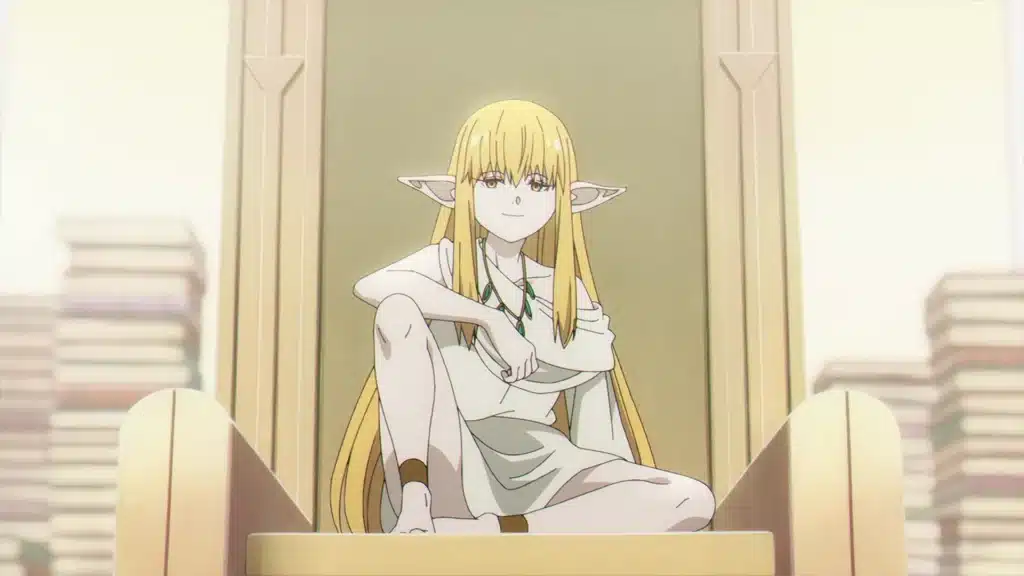
Serie is another elven mage who is even older than Frieren. She is ancient, powerful, and emotionally distant, showing what Frieren could become if she never learns to value fleeting moments.
Serie views magic as the only constant, while Frieren slowly learns that memories matter just as much.
Kraft

Kraft, another elf encountered during the journey, has lived so long that even he struggles to remember his past. His age emphasizes one of the story’s quiet warnings: live long enough, and memories fade unless you hold onto them.
These elves serve as mirrors to Frieren’s future — paths she could follow or avoid.
The Contrast Between Elves and Humans
Humans in Frieren age realistically:
- Childhood is brief
- Adulthood is pressured
- Old age comes quickly
Characters like Fern and Stark feel time intensely. They train hard, grow quickly, and fear being left behind. Their urgency contrasts sharply with Frieren’s patience, creating emotional tension and growth.
Where Frieren thinks in decades, Fern thinks in years. Where Stark thinks in days, Frieren thinks in centuries.
Why Humans Age Normally in Frieren’s World
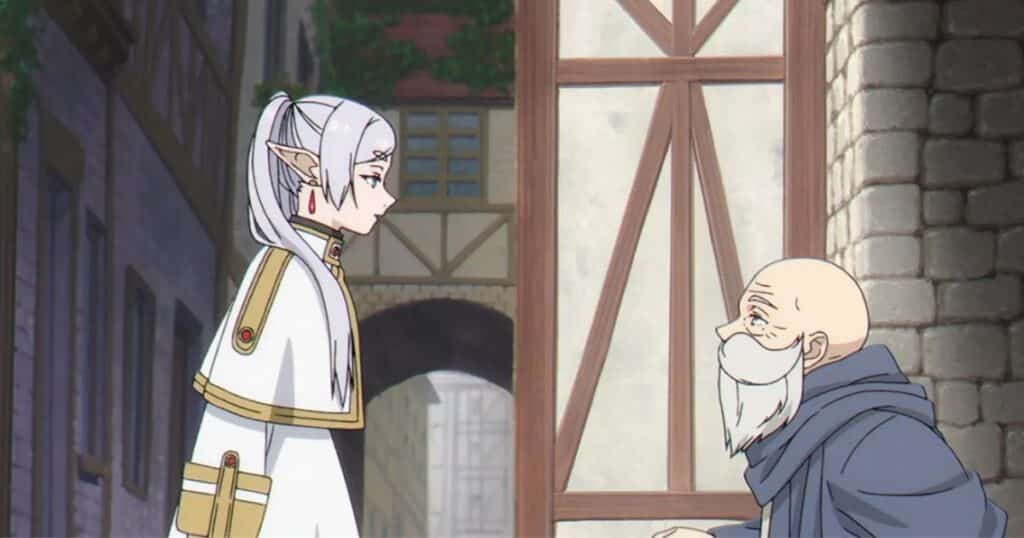
Unlike elves, humans in Frieren age realistically. There’s no magic slowing them down, no extended lifespan unless explicitly stated. This grounds the story emotionally.
Humans:
- Age visibly
- Feel urgency
- Make mistakes quickly
- Love deeply because time is limited
This contrast is intentional. It reminds the viewer that time gives meaning to life, not the other way around.
How Old Is Frieren In The Anime?
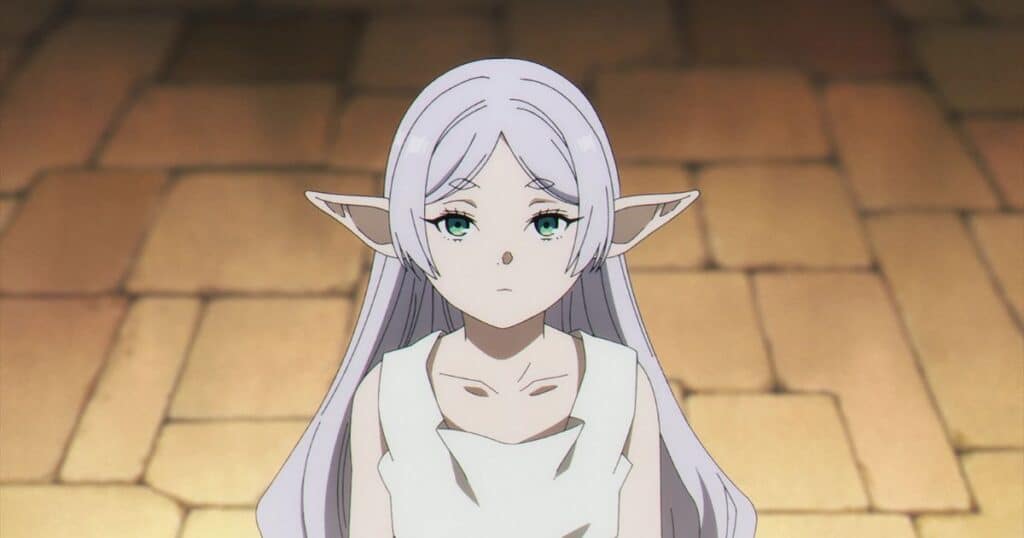
While the series never gives an exact number, it clearly establishes that Frieren has lived for more than a millennium. She mentions events and magic techniques that existed hundreds of years before the Hero’s Party ever set out to defeat the Demon King. By the time Himmel, Heiter, and Eisen meet her, Frieren has already lived several lifetimes compared to humans.
To put this into perspective:
- The entire journey of the Hero’s Party lasts about 10 years.
- Himmel grows old and dies within 50 years after their victory.
- To Frieren, those decades pass in what feels like moments.
This extreme age gap is not a background detail — it is the emotional engine of the story.
In conclusion, Frieren is over 1,000 years old.
How Old Is Fern?

Fern is around 16 to 18 years old at the beginning of the main journey.
She was orphaned during a demon attack and later raised by Heiter, one of the original Hero’s Party members. Fern matures quickly due to hardship and responsibility, which often makes her seem older than she actually is.
Compared to Frieren:
- Fern’s entire life is a blink
- Her emotional reactions are faster and more intense
- She values time deeply, even if she doesn’t always realize it
Fern represents human urgency — the need to grow, learn, and act before time runs out.
How Old Is Stark?
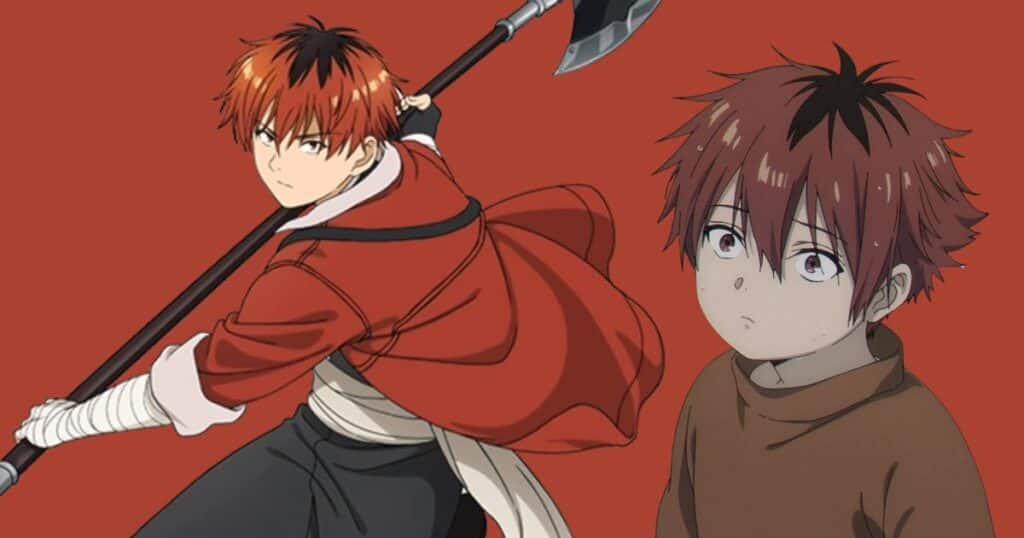
Stark is roughly 17 to 18 years old, similar in age to Fern.
As a warrior trained by Eisen, Stark appears strong but emotionally insecure. He doubts himself constantly and fears death, which contrasts sharply with Frieren’s calm acceptance of danger.
Stark’s youth highlights:
- Human fear of mortality
- The pressure to prove oneself quickly
- The short window humans feel they have to become “enough”
Where Frieren has endless time to improve her magic, Stark feels like every failure counts.
Frieren vs Fern and Stark: A Lifespan Comparison
To better understand the gap:
- Frieren: 1,000+ years
- Fern: less than 20 years
- Stark: less than 20 years
That means Frieren has lived over 50 times longer than Fern and Stark combined — and she will likely outlive them too.
This imbalance creates quiet tension throughout the story. Frieren grows attached, but the audience knows what she is trying not to think about: eventually, she will be alone again.
Is Frieren Immortal?
No — Frieren is not immortal.
She can die, and she knows it. However, her lifespan is so long that death feels distant, almost theoretical. The story subtly suggests that even Frieren may not fully grasp her own mortality yet.
That makes her journey more poignant. She is learning how to live before she learns how to die.
Final Thoughts: Frieren’s Age Is the Heart of the Story
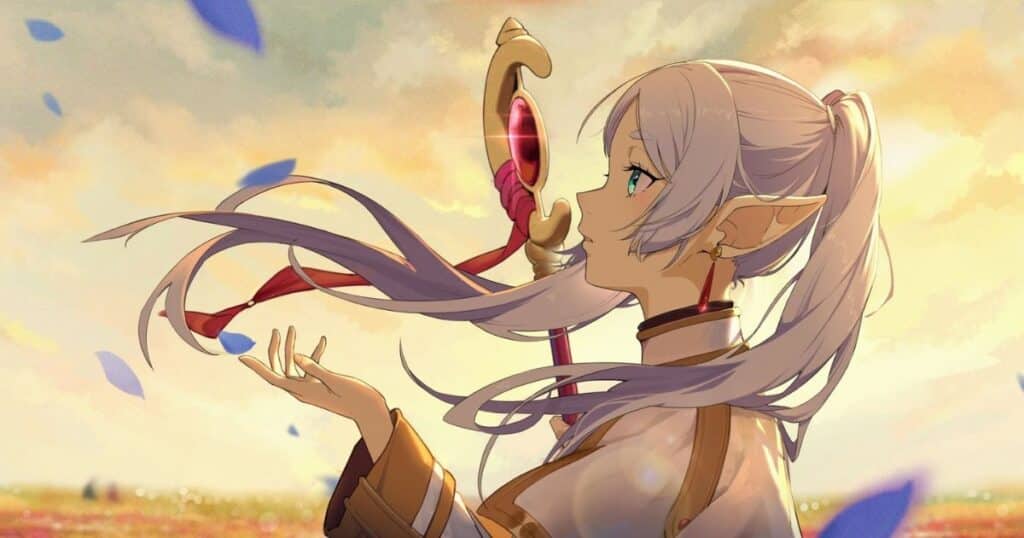
So, how old is Frieren? Over a thousand years — but emotionally, she’s still learning how to understand a single human lifetime.
Frieren: Beyond Journey’s End isn’t just a fantasy anime. It’s a meditation on time, memory, and regret. Frieren’s age explains her mistakes, her silence, and her slow awakening to what truly matters.
Fern and Stark remind her what it means to live urgently. Other elves remind her what happens when time becomes meaningless. And the viewer is left with a simple, haunting truth:
Living longer doesn’t mean living better.
Understanding time does.