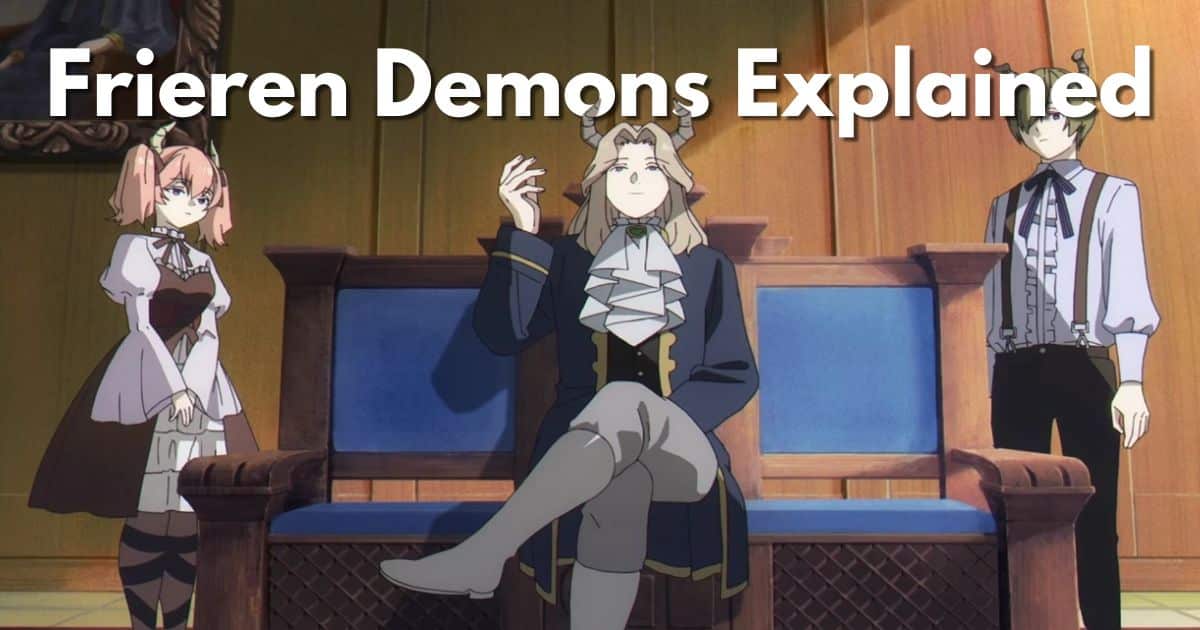
In most fantasy stories, demons are dangerous because they are strong, violent, or monstrous. In Frieren: Beyond Journey’s End, demons are dangerous for a far more unsettling reason: they understand humans just enough to manipulate them, but not enough to value them.
This article explains how demons work in Frieren, what their philosophy actually is, why they lie so convincingly, and why the series treats them as an existential threat rather than a simple enemy race.
Demons in Frieren Are Not “Evil Humans”
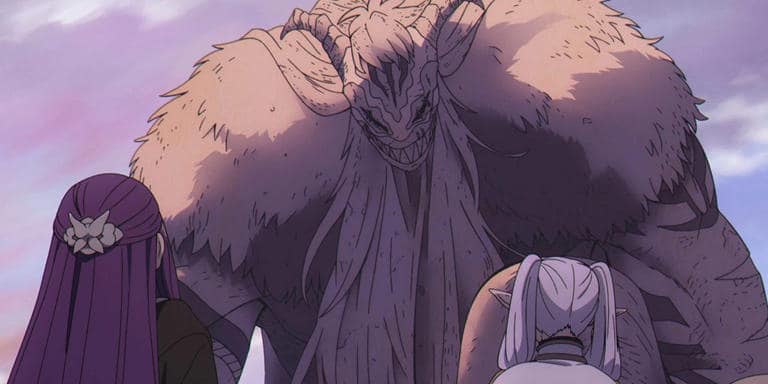
One of Frieren’s most important worldbuilding choices is that demons are not humans with bad morals. They are a different species with a different survival strategy.
Demons evolved to prey on humans. Their intelligence, language, and emotional mimicry exist for one purpose: to make humans lower their guard.
This is why Frieren repeatedly stresses that demons are not misunderstood or morally confused. They are functioning exactly as intended by their nature.
Demons in Frieren
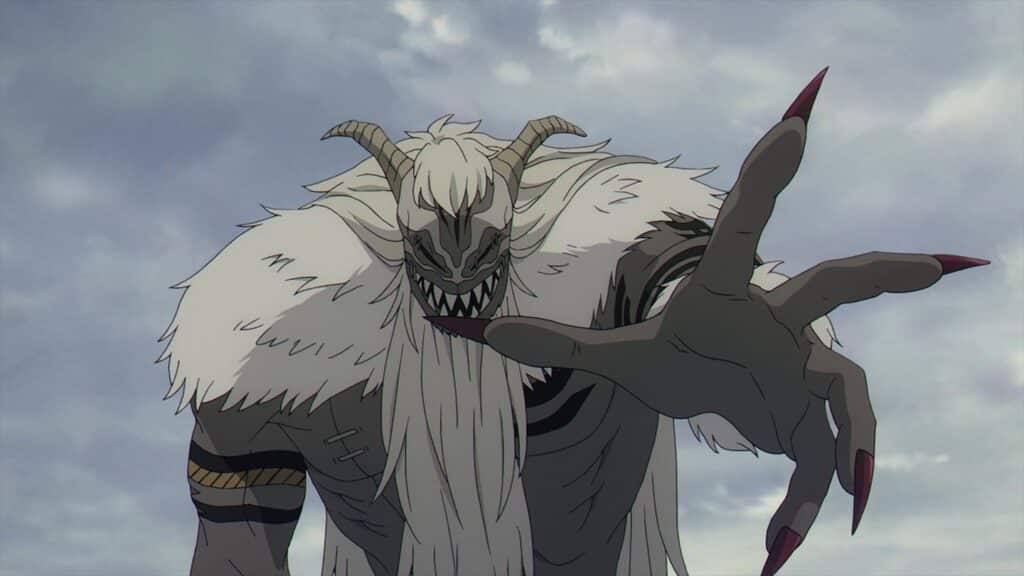
The demons in Frieren occupy a unique narrative role. They are not omnipresent villains, nor are they random threats. Each demon encounter exists to reveal something about the limits of communication, empathy, and trust.
Demons often appear calm, articulate, and reasonable. They may request peace, offer deals, or express curiosity. This presentation is intentional. The danger arises when humans assume shared emotional frameworks that do not exist.
For U.S. viewers accustomed to fantasy where villains declare themselves openly, Frieren’s demons can feel unsettlingly realistic. They resemble predators who learned to speak the language of their prey.
Frieren Demon Race
The Frieren demon race is defined less by appearance and more by philosophy. Demons lack human-style empathy. They do not value relationships, shared memory, or emotional bonds. Instead, they value efficiency, survival, and advantage.
What makes the demon race particularly dangerous is that they understand how humans think without experiencing those thoughts themselves. They learn emotional responses the way one learns a language—functionally, not emotionally.
This makes their lies more convincing. A demon does not hesitate when lying, because there is no internal conflict. There is no guilt to manage, no moral tension to resolve.
Demon Philosophy: Language Without Empathy

Demons in Frieren speak fluently, reason logically, and can even debate ethics. What they lack is empathy.
They do not lie because they enjoy deception. They lie because truth has no inherent moral value to them. Words are tools, not commitments. Promises are strategies, not bonds.
From a demon’s perspective, deceiving a human is no more immoral than a human setting a trap for an animal. This philosophical gap is what makes coexistence impossible.
Demons as a Philosophical Threat, Not Just a Physical One
What makes Frieren’s demons exceptional is that they challenge a deeply human assumption: that intelligence leads to morality.
Frieren rejects this assumption completely. Intelligence enables strategy, not ethics. Language enables persuasion, not honesty. Civilization does not guarantee compassion.
Demons force characters and viewers alike to confront an uncomfortable idea: understanding someone does not mean they are safe.
Why Demons Lie So Convincingly
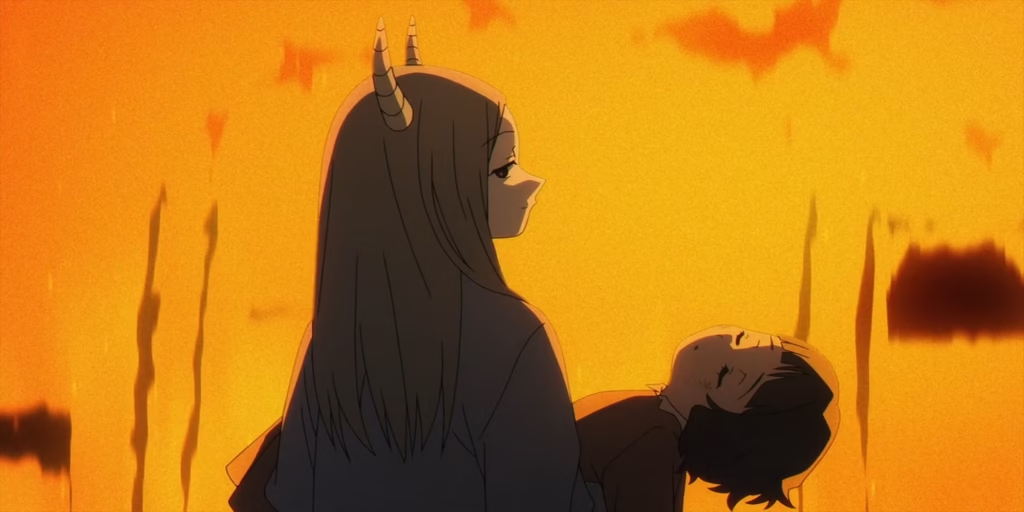
Demons are excellent liars because they do not experience guilt.
Human lies often fail because emotion leaks through tone, hesitation, or self-doubt. Demons lack those emotional constraints. When they lie, they do so calmly, logically, and consistently.
More importantly, demons study human behavior. They learn which words trigger mercy, which stories evoke sympathy, and which emotions cause hesitation. They weaponize kindness itself.
In Frieren, the most dangerous demon is rarely the strongest one. It is the one who understands how humans want to believe.
The Illusion of Peaceful Demons
A recurring theme in Frieren is the temptation to believe demons can change. Demons who speak gently, negotiate, or express curiosity about humans are especially dangerous because they create false hope.
The series is very deliberate here. Whenever demons attempt diplomacy, it is never framed as moral progress. It is framed as a hunting adaptation.
Frieren’s insistence on eliminating demons without negotiation is not cruelty. It is experience.
Are demons evil in Frieren?
The anime’s answer is subtle. Demons are not evil in a moral sense because morality, as humans understand it, does not apply to them. They do not choose cruelty. They choose efficiency.
However, this does not make them harmless or redeemable. Their actions cause suffering, and they do not care. The danger lies precisely in their emotional absence.
Frieren challenges the idea that understanding leads to peace. In this world, understanding demons leads to a different conclusion: coexistence is not possible because values are incompatible.
Aura the Guillotine and the Logic of Control
The demon Aura represents a critical aspect of demon philosophy: power validated through dominance, not morality.
Aura’s magic is built around submission. Those weaker must obey. Those stronger command. There is no concept of fairness, only hierarchy.
This worldview explains why demons cannot comprehend sacrifice, loyalty, or delayed empathy. These ideas have no survival value in their biological and cultural evolution.
Recommended products
-
Original Frieren The Animal Party Aura Plush
Original price was: $99.16.$49.58Current price is: $49.58.

Frieren Demons vs Humans
The contrast of Frieren demons vs humans is one of the series’ most important themes.
Humans communicate to connect. Demons communicate to manipulate.
Humans value memory. Demons discard it.
Humans lie with hesitation. Demons lie without friction.
This difference creates irreversible tension. Humans cannot safely treat demons as equals because doing so requires assuming shared values that do not exist.
For U.S. viewers, this dynamic often feels disturbingly familiar, echoing real-world situations where bad actors exploit empathy, trust, or good faith.
Why Frieren’s Demons Feel So Unsettling
Frieren’s demons are unsettling because they strip away fantasy comfort. There is no tragic backstory to redeem them, no shared moral ground to negotiate.
They reflect a real-world fear: predators who look reasonable, speak calmly, and exploit empathy without ever reciprocating it.
That realism is what makes them frightening long after the episode ends.
Frieren the Slayer

“Frieren the Slayer” is not a title she claims, but one earned through centuries of unhesitating action against demons. In Frieren: Beyond Journey’s End, the name exists because Frieren treats demons as a solved problem, not a moral debate.
She does not act out of hatred or heroism. She acts on history. Having seen every variation of demon deception end in human loss, Frieren eliminates them to prevent future tragedy.
The title is unsettling because it reflects an uncomfortable truth. Frieren is not cruel. She is simply the result of paying attention for a very long time.
Recommended products
-

Frieren The Slayer Anime Hoodie
$59.89 -

Frieren The Slayer Shirt
$32.15 -

Frieren The Slayer Anime Sweater
$49.00
Why Frieren Shows No Mercy to Demons
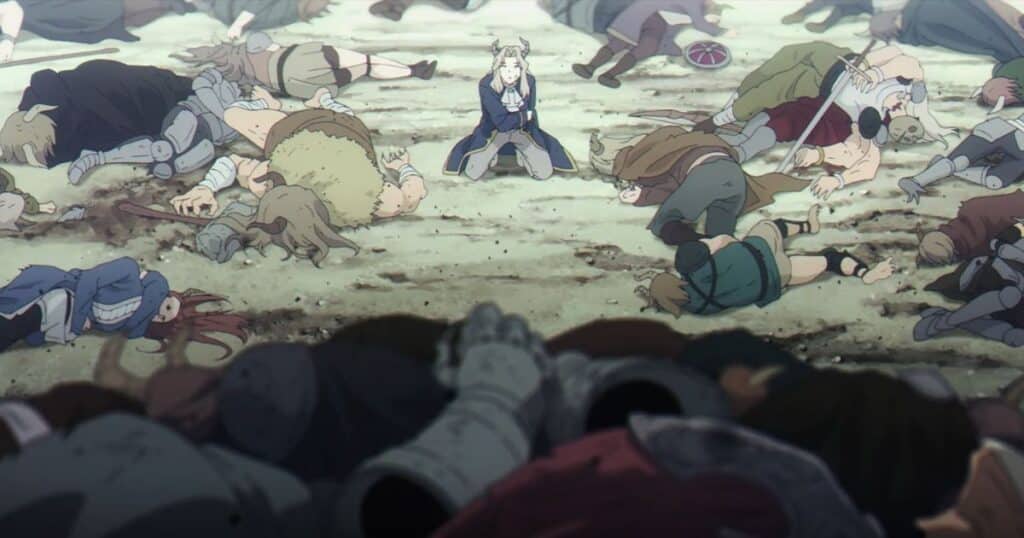
To new viewers, Frieren’s coldness toward demons can feel harsh. The series challenges that instinct intentionally.
Frieren has lived long enough to see patterns repeat. Every attempt to empathize with demons ends the same way: human deaths caused by misplaced trust.
Her lack of hesitation is not emotional numbness. It is moral clarity born from historical evidence.
In Frieren, mercy toward demons is not kindness. It is negligence.
How Demons Reinforce Frieren’s Core Themes
Frieren is a story about time, memory, and regret. Demons exist as a counterpoint to those themes.
They do not reflect. They do not regret. They do not learn morality through experience. Time changes humans. Time does not change demons.
This contrast reinforces why human connections matter in the story. Meaning is not universal. It is chosen.
What Frieren Demons Ultimately Represent
At their core, demons in Frieren represent the danger of assuming shared values where none exist.
They are not villains because they hate humans. They are villains because they do not recognize humans as moral equals at all.
That distinction is what elevates Frieren’s demon lore from fantasy trope to philosophical statement.